Displaced farming families in Gaza return to their lands and resume production
Gaza, August 22 (Hibya) - Some farming families displaced by the war in Gaza have returned to their lands, begun restoring damaged fields and resumed food production.
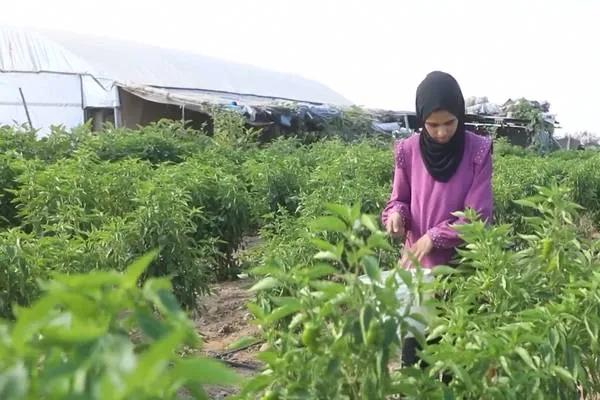
According to CCTV news; some farming families displaced by the war in Gaza have returned to their lands, started restoring damaged fields and continued food production.
However, high costs, shortages of agricultural supplies, access to irrigation water and restoring heavily damaged lands for reuse remain among the major obstacles to production.
In some areas of Gaza, agricultural production has resumed on farmland damaged during the war. Fresh vegetables have begun to be harvested again in agricultural areas in the Al-Zaitoun neighborhood, while families in the area are trying to regain their livelihoods by cultivating their lands again.
The Al-Dahdouh family is among the families that returned to their lands after the war. The family stated that when they returned after displacement, their lands were covered with rubble and debris, and that all family members worked together to make them suitable for farming again.
Palestinian farmer Wajiha Al-Dahdouh described their experience:
"When we returned after being displaced, the land was covered with piles of rubble and debris and access was difficult. Everyone in the family worked together to rehabilitate it for farming. Fortunately, in the end we were able to grow crops again."
It was reported that the nearly three-year war caused damage to a large part of Gaza's agricultural lands or destroyed them with bulldozers. This situation increased the challenges faced by displaced families trying to return to production.
Families restarting agricultural activities are struggling not only with clearing the lands, but also with high production costs and difficulties accessing basic needs.
Palestinian farmer Iman Al-Dahdouh described the economic hardships and problems they face in agricultural production:
"Due to high costs, we cannot hire workers to help with farming. We also face serious difficulties securing water for irrigation and pesticides. It has become a heavy burden on us."
The Al-Dahdouh family is among approximately 350 farming families supported by the United Nations Development Programme (UNDP). Around 1,100 families are expected to benefit from the initiative in total.
British News Agency
 Facebook
 Tweeter
 Whatsapp