Search and rescue operations continue after mudslide in Nepal
Devighat, Bidur, September 5 (Hibya) – Search and rescue operations are continuing after the mudslide that occurred on August 26 along the Nepal-China border and caused many deaths, while survivors are returning to their destroyed homes and trying to recover belongings trapped under the debris.
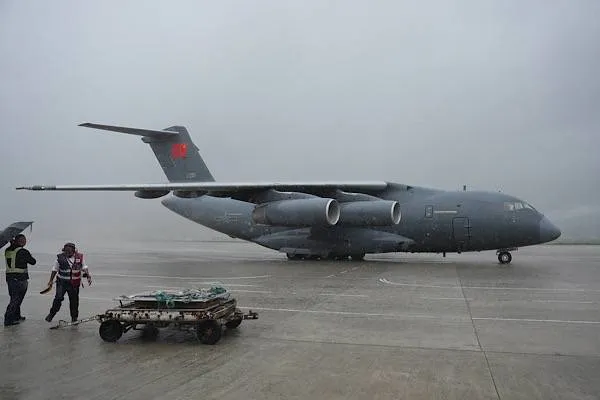
According to CCTV, search and rescue operations are continuing after the mudslide that occurred on August 26 along the Nepal-China border and caused many deaths, while survivors are returning to their destroyed homes and trying to recover belongings trapped under the debris.
According to local authorities, 1,344 people have died so far and 4,898 remain missing in the disaster, which was reportedly triggered by an ice and rock avalanche.
Disaster survivors living in Devighat village, part of Nepal's Bidur Municipality, are trying to rebuild their lives after the catastrophe. Many homes in the village were destroyed, while some structures that remained standing became unusable because of the damage.
Ambik Nepali, who escaped the disaster with his wife with only their lives, returned to his destroyed home to retrieve medication for his wife, who has a heart condition, and the necessary medical documents. The couple had to leave most of their belongings behind during the mudslide.
Nepali said he was able to retrieve his medical documents and prescriptions with the help of local police. He described what they experienced in the following words:
“We informed the police about our important documents and medical records. They helped us by sending people to retrieve those items. We were only able to get things from one room. We could not enter the other three rooms because the doors were completely blocked. Still, we managed to recover some documents and gold items.”
In areas affected by the disaster, volunteers from various organizations are helping survivors assess the rubble of their homes and recover belongings left behind.
Social worker Pushpa Adhikari said the destruction had spread across a wide area and that the region would take a long time to recover, adding that the government should establish permanent housing solutions for families left homeless.
Adhikari said family size should also be taken into account in housing planning, stating, “Managing the damage will take a long time because there is so much destruction here. This is not a small matter. Where we are is only one part, but it has spread over a very large area. Therefore, the government should make housing arrangements for families left homeless. Rooms should be allocated according to the number of family members. For example, a family of ten should be provided with enough rooms accordingly.”
Before large-scale rehabilitation work begins in the region, the government's priority is to reach missing people and recover the bodies of those who died from the debris.
As search and rescue teams intensify efforts to clear thousands of tons of mud and debris, it was reported that the fate of many people remains unknown even a week after the disaster.
Rescue team leader Ranjan Lal Sherstha said operations were continuing, stating, “Even a week after the disaster, the bodies have not all been found. Just yesterday, around 20 to 22 bodies were found in one house. Search and rescue operations are still ongoing. It is a major tragedy for Nepal. We have seen many difficult situations before. But the current one is the biggest.”
As search and rescue teams continue debris removal and efforts to reach the missing, it is noted that there remains a need for long-term support to provide shelter and basic necessities for disaster survivors.
British News Agency
 Facebook
 Tweeter
 Whatsapp