
Report: World’s largest arms producers pushed their revenues to record levels last year
Stockholm, December 1 (Hibya) – According to a report published on Monday, the world’s biggest arms-producing companies recorded a 5.9 percent increase last year in revenues from the sale of weapons and military services, driven by the wars in Ukraine and Gaza as well as rising military spending by states.
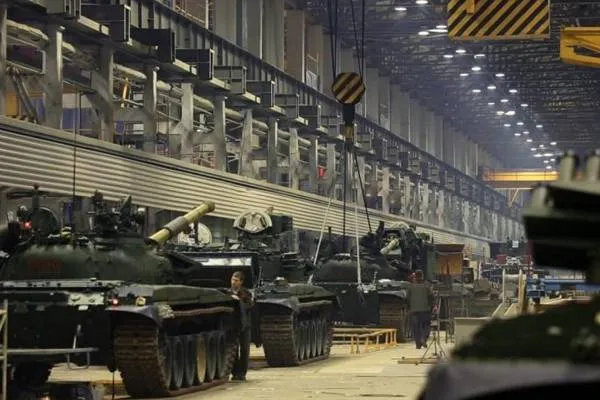
The Stockholm International Peace Research Institute (SIPRI) announced that revenues of the top 100 arms producers rose to 679 billion dollars in 2024, the highest figure ever recorded.
Although most of the increase came from companies based in Europe and the United States, growth was also seen across much of the world, with the exception of Asia and Oceania, where problems in China’s arms industry led to a slight decline.
Of the 39 US companies in the top 100 – including Lockheed Martin, Northrop Grumman and General Dynamics – 30 reported increased revenues. Their combined income rose by 3.8 percent to 334 billion dollars. However, SIPRI noted that “widespread delays and cost overruns” continue to affect the development and production of major US-led programs, including the F-35 fighter jet.
Excluding Russia, 23 of the 26 companies in Europe saw their arms revenues rise as the continent increased its military spending. Their total income climbed by 13 percent to 151 billion dollars, supported by demand linked to the war in Ukraine and by a heightened perception of threat from Russia.
Particularly large gains were recorded by the Czech Republic’s Czechoslovak Group. This growth was due in part to a government-led project to supply artillery shells to Ukraine. Ukraine’s JSC Ukrainian Defense Industry reported a 41 percent increase in revenues.
European firms are investing in new production capacity to meet rising demand, but SIPRI researcher Jade Guiberteau Ricard warned in a statement that “the supply of materials could become an increasingly serious challenge,” pointing out that the restructuring of supply chains for critical minerals, in light of China’s export restrictions, could be a further complicating factor.
The two Russian companies on SIPRI’s list – Rostec and United Shipbuilding Corporation – increased their arms revenues by 23 percent to a combined 31.2 billion dollars, despite sanctions leading to shortages of components. SIPRI said that domestic demand more than compensated for falling weapons exports, but that a shortage of skilled labour remains a problem.
Arms revenues also rose in the Middle East, with the three Israeli companies in the ranking posting a 16 percent increase, bringing their income to 16.2 billion dollars. SIPRI researcher Zubaida Karim said that reactions to Israel’s actions in Gaza in 2024 had “very little impact” on interest in Israeli weapons, and that many countries continue to place new orders.
In Asia and Oceania, revenues fell by 1.2 percent to 130 billion dollars, mainly due to a 10 percent decline in the income of the eight Chinese companies in the index. SIPRI noted that this followed numerous corruption allegations in China’s arms procurement system, which last year led to the postponement or cancellation of major contracts.
British News Agency
 Facebook
 Tweeter
 Whatsapp